
August 14, 2026
It Was Only 16 Years Ago: How Technology Changed Casual Staffing in Early Childhood
By Talent Now
I was listening to ABC Radio National’s Conversations this week with Mark Woodland, founder of Xplor and now Kismet, when something he said stopped me.
The iPad was only launched in 2010. That seems like yesterday!
Mark was reflecting on the administrative burden he encountered in early childhood education and care, the problems he saw and what technology could automate.
It immediately took me back to the problems we were trying to solve when we built Talent Now.
Not that long ago, finding a casual educator was an incredibly manual process.
Educators would let agencies know when they were available and wait for the phone to ring with an offer of work. Centres would call when they needed someone and wait while consultants worked through their lists trying to fill the shift.
SMS, email and eventually messaging groups made that process faster, but they didn’t fundamentally change it. There was still a person sitting between the service that needed an educator and the educator who wanted to work.
A Different Question
By 2018, Australians were already accustomed to doing almost everything from their phones. We could order a car, book accommodation, shop, bank and communicate instantly.
So why did finding a casual educator still need to work the way it always had?
When we built Talent Now, rather than using technology to help someone make those calls faster, we used technology to change the process.
A service could post a shift 24/7 and the platform would instantly identify suitable educators based on qualification and location. Only those educators would see the opportunity, and they could choose whether to accept it. Services could see who was coming and start building relationships with educators they wanted back.
It was on-demand casual staffing for early childhood. And that was only part of the opportunity.
Technology could also take on much of the administration and compliance surrounding casual staffing – storing documents, monitoring expiry dates, sending reminders and, eventually, connecting workforce information with other systems.
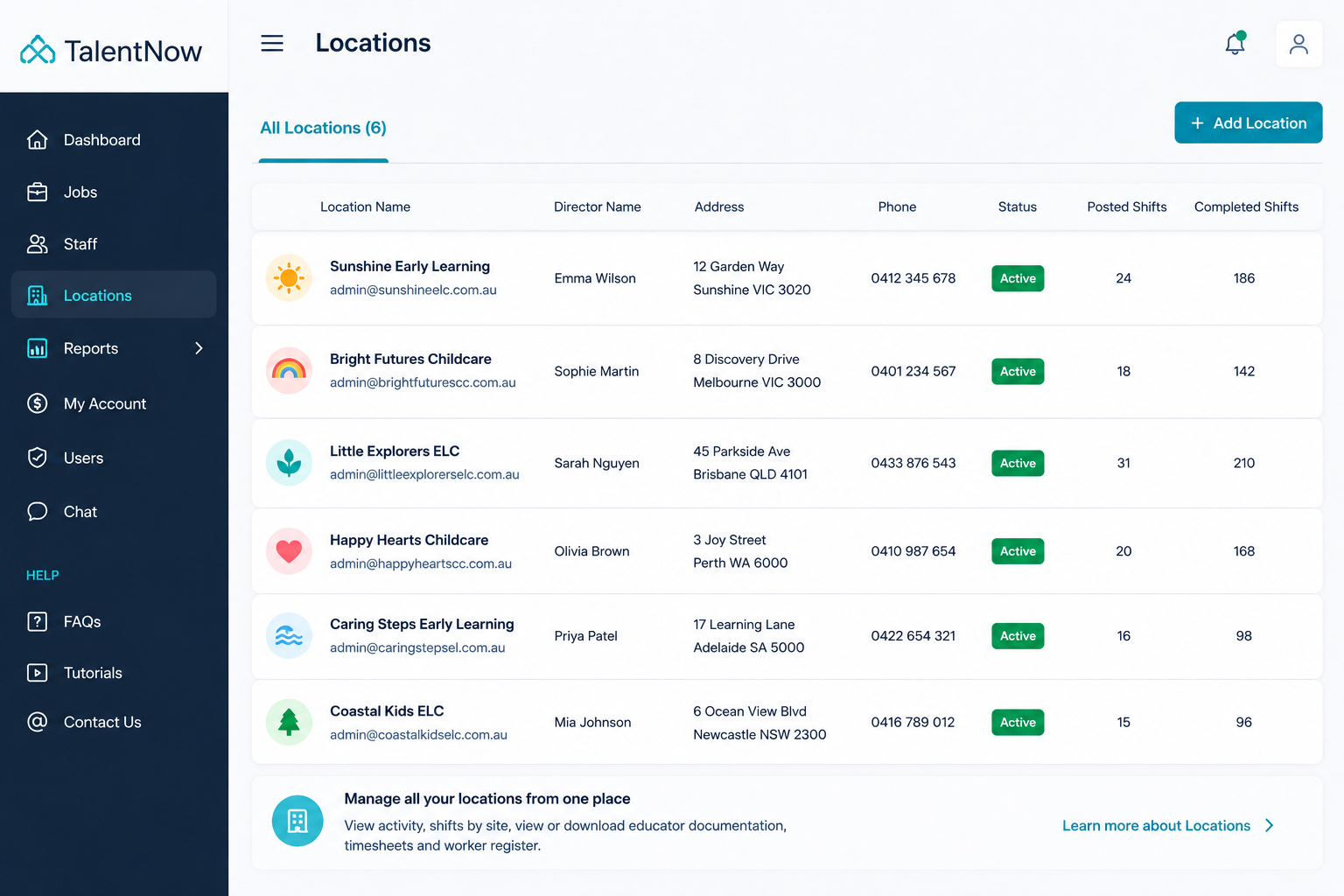
It also changed what was possible for organisations operating multiple services.
Instead of each centre managing its casual workforce largely in isolation, providers could suddenly see what was happening across multiple locations from a single platform – bookings, educator documentation, staffing patterns, usage and gaps – and manage their casual workforce across the organisation.
Today that kind of visibility feels completely normal. Not that long ago, it simply wasn’t part of how casual staffing worked.
Looking back, what surprises me isn’t how much has changed. It’s how recently it changed.
In 2010, the iPad was new.
In 2018, we were asking why finding a casual educator still required so many phone calls and so much manual administration.
Today, thousands of casual shifts can be coordinated without a single phone call, across individual services or entire organisations.
It makes me wonder which of the processes we accept as normal in ECEC today will we look back on in another 15 years and ask: Why did we ever do it that way?